About us
We are a theoretical research group at the School of Electrical and Electronic Engineering and the Institute for Digital Molecular Analytics and Science at Nanyang Technological University, Singapore. The group is lead by Assistant Professor Matthew R. Foreman.
Our research focuses on optical and plasmonic sensing, polarisation sensitive imaging, disordered media and electromagnetic theory. More information on some of our past and present projects can be found by visiting our Research pages.
Recent news

Successful Qualifying Examination!
19 Oct 2026: Congratulations to Baruva, who today successfully passed his PhD qualifying examination! With the formal assessment out of the way, he can now dive fully into the fun part unraveling the sensing properties of complex photonic networks.
Paper accepted for publication in Nanoscale
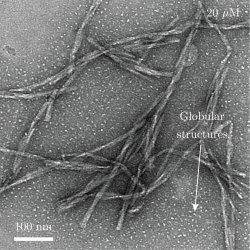
16 Oct 2026: We are delighted to announce that our latest manuscript, "Small-molecule-induced species redistribution drives amyloid remodeling along a conserved kinetic landscape," is now in press with Nanoscale. A huge well done to Radhika and the entire team (Ann Tran, Atul Parikh, and Matthew) for bringing this detailed study on disaggregation kinetics and supramolecular clustering over the finish line.

Topical editor reappointment
25 Aug 2026: Some happy editorial news from the group - Matthew has been reappointed for a second term as Topical Editor for Optics Letters. He will continue serving within the Optica Publishing Group family, overseeing manuscript submissions in multiple scattering, polarimetry, imaging and optical theory.

PhD thesis submitted
10 Aug 2026: Huge congratulations to Kaiyuan Wang on submitting his PhD thesis, "Exceptional Points in Photonic and Network Systems: Theory, Higher-Order Design, and Programmable Responses"! His thesis represents a substantial body of work on non-Hermitian photonics, higher-order EP design, and reconfigurable scattering networks. The thesis has now been sent out for external examination, with just the viva left ahead. Fantastic effort, Kaiyuan!
Recent publications
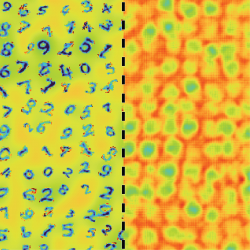
Abstract : Lensless imaging recovers object information computationally from diffraction patterns recorded without imaging optics, making performance strongly dependent on the assumed forward model during reconstruction. In practical systems, illumination often exhibits partial spatial coherence, which alters image formation and can lead to substantial reconstruction errors when inversion assumes fully coherent propagation. Here, the role of spatial coherence is examined for assorted object classes using a coherence-aware forward model based on generalised van Cittert-Zernike Schell propagation. Simulated measurements are generated over a controlled range of effective source coherence and reconstructed using either a partially coherent forward model or a conventional coherent propagation model. Our results show that decreasing spatial coherence progressively degrades reconstructions under the coherent assumption, whereas incorporating partial coherence can preserve object structure and improve image quality, particularly for dense high-spatial-frequency features. Reconstructions from experimental measurements further confirm the practical need to use coherence-aware inversion under partially spatially coherent illumination. These findings establish spatial coherence as a defining component of the inverse problem in lensless imaging.





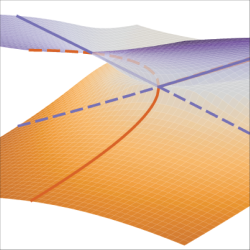
Abstract : Exceptional points (EPs) have long promised enhanced sensing of physical signals, but have practically been limited by simultaneous enhancement of noise. Aligning an EP's non-analytic response with target perturbations while suppressing noise has, however, remained challenging. Here we show that fully passive, phase-tuned multi-port scattering networks enable scattering EPs with tailored anisotropic response to perturbations. We leverage projection-induced non-unitarity to realize effective non-Hermitian behavior when measuring only a subset of system ports. By formulating EP design in terms of the discriminant of the projected scattering sub-block and its directional derivatives, we give control-counting rules relating the number of programmable link phases to achievable Riemann surface topologies. We demonstrate our framework in a four-port photonic network by designing both an anisotropic EP and a Dirac-type EP with linear splitting along two parametric directions. We further suppress the global thermal drift response of a network-based sensor to a 3/2 power-law scaling while retaining square-root sensitivity to localized signals. Since the effective non-Hermiticity arises purely from port projection, our approach transfers to integrated photonic and microwave meshes, acoustic circuits, and projected metasurfaces, offering a phase-only route to reconfigurable non-Hermitian response and noise-robust EP sensing.
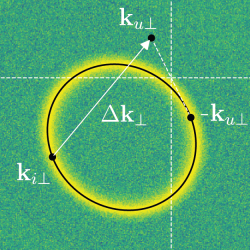
Abstract : We investigate anisotropy in Fourier-domain speckle correlations associated with the optical memory effect in disordered scattering media. Within a single scattering framework, we show that while the conventional memory effect constrains transverse wavevector shifts, the correlation strength also depends non-trivially on differences in the axial wavevector components. Our theory is supported by numerical simulations of a three-dimensional, single scattering medium, which show excellent agreement with theory. We extend the analysis to pseudo-correlations, demonstrating that analogous anisotropic behavior arises in the conjugate memory effect. Our results highlight the often neglected role of axial disorder in scattered field correlations.
Funding
Our research is supported by generous funding from: